
Dental Implants Sydney: Single Tooth to Full Mouth Options

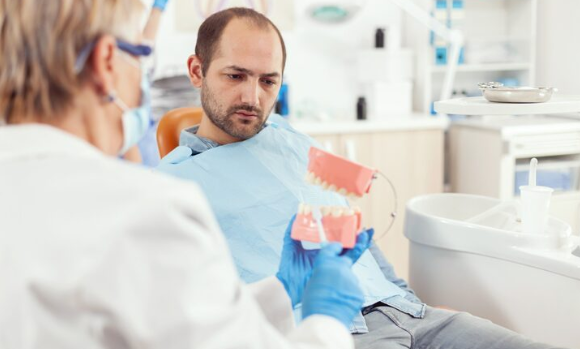
There is a moment many dental patients describe quite similarly. You are sitting across from your dentist, having just received news that a tooth cannot be saved, or perhaps you have been living with several missing teeth for years and the toll it is taking on your confidence and comfort has finally reached a tipping point. The question that follows is always the same: what are my options?
For Sydney residents seeking a solution that is permanent, functional, and genuinely life-changing, dental implants consistently stand out as the most clinically sound answer available in modern dentistry. But what many people do not realise is that implant treatment is not a single, one-size-fits-all procedure. It is a family of solutions, designed to address everything from the loss of a single tooth to the complete restoration of an entire arch.
This guide walks you through each of those options clearly and honestly, so you can approach your next dental conversation with confidence.
The Foundation: Why Implants Work Differently to Other Replacements
Before exploring the specific options available, it helps to understand what makes dental implants fundamentally different from other forms of tooth replacement.
A dental implant is a titanium post, surgically placed into the jawbone, that acts as an artificial tooth root. The body accepts titanium readily, and over a period of weeks to months, the surrounding bone fuses directly to the implant surface through a process called osseointegration. This biological bonding is what gives implants their exceptional stability and durability.
Once integrated, the implant supports a custom-made restoration, whether that is a single crown, a bridge, or a full arch of teeth. Because the implant is anchored in the bone rather than resting on the gum surface or relying on adjacent teeth for support, it functions in a way that closely replicates the behaviour of a natural tooth root.
Critically, implants are the only tooth replacement option that actively stimulates the jawbone, preventing the bone loss that inevitably follows tooth extraction when the site is left unaddressed. This makes them not just a cosmetic solution, but a genuinely protective investment in long-term oral health.
The Australian Dental Association recognises dental implants as a clinically proven and highly effective treatment for tooth loss, with success rates consistently exceeding 95 percent in healthy patients treated by qualified practitioners.
Option One: Single Tooth Implant
The single tooth implant is the most straightforward application of implant technology, and it remains one of the most transformative. It is the ideal solution when one tooth has been lost through decay, trauma, or extraction, and the surrounding teeth are otherwise healthy.
The treatment involves placing one titanium implant into the gap left by the missing tooth, allowing it to integrate with the bone, and then attaching a single porcelain crown on top. The crown is colour-matched, shaped, and sized to complement your existing teeth so precisely that most people cannot identify the restoration at all, even in close conversation.
What makes this option particularly appealing is what it does not require. Unlike a traditional dental bridge, a single implant does not involve modifying or crowning the healthy teeth on either side of the gap. Those teeth remain completely intact. The implant is entirely self-supporting, which is better for the health of your overall dentition in the long run.
At Bigger Smiles, single tooth implants are planned using advanced 3D imaging that maps the patient’s jaw structure in precise detail before placement. This guided approach means the implant is positioned at exactly the right angle and depth to support both function and aesthetics, leaving nothing to guesswork.
Option Two: Implant-Supported Dental Bridge
When two or more adjacent teeth are missing, an implant-supported bridge offers an elegant and highly stable solution. Rather than placing one implant for every missing tooth, two implants are positioned at either end of the gap, and a custom-made bridge of porcelain teeth is secured across them.
This approach is particularly efficient when several consecutive teeth are absent. It reduces the total number of surgical sites while still delivering a fixed, permanent restoration that looks and performs like natural teeth.
The key advantage over a conventional bridge is, again, the preservation of healthy tooth structure. A traditional bridge requires grinding down the adjacent natural teeth to serve as anchors. An implant-supported bridge requires nothing of the sort. The implants bear the full load of the restoration, leaving surrounding teeth untouched.
Bigger Smiles designs implant-supported bridges using digital smile design technology, which allows patients to visualise their expected outcome before treatment even begins. This level of transparency is central to the way the clinic approaches patient care, ensuring no one proceeds without a clear understanding of what to expect.
Option Three: Multiple Implants for Non-Adjacent Teeth
Not all tooth loss follows a neat pattern. Many patients present with missing teeth in different areas of the mouth, the result of years of wear, infections, or trauma that occurred at different points in their lives. In these situations, individual implants can be placed at multiple sites across the jaw, each supporting its own restoration.
This approach requires careful planning to ensure that the implants work harmoniously within the patient’s overall bite. The relationship between upper and lower teeth, the distribution of chewing force, and the aesthetics of the smile as a whole all need to be considered and mapped out precisely.
At Bigger Smiles, the use of comprehensive 3D imaging and digital treatment planning tools allows the clinical team to assess the entire mouth before proposing a solution. Each implant is placed with the full picture in mind, not in isolation.
Option Four: All-on-4 and Full Arch Restoration
For patients who have lost most or all of their teeth, or who are currently wearing complete dentures and looking for a more stable and permanent alternative, full arch implant solutions represent an extraordinary advancement in restorative care.
The All-on-4 concept involves placing just four strategically positioned implants in each jaw, which together support a full arch of fixed, non-removable teeth. The angled placement of the rear implants is a deliberate design feature that maximises contact with available bone, often making the procedure possible even for patients who have experienced some degree of bone loss.
The result is a complete set of teeth that is anchored firmly in the jaw. There is no slipping, no adhesive required, and no need to remove the restoration for cleaning. Patients eat, speak, and smile with the kind of confidence that denture wearers often report missing significantly.
For patients requiring even greater support or who have more complex anatomical considerations, six or more implants per arch may be recommended, a solution sometimes referred to as All-on-6. The clinical team at Bigger Smiles assesses each case individually to determine the most appropriate configuration, always working toward the most stable and enduring outcome possible.
Full arch restoration is, without question, one of the most life-changing procedures available in contemporary dentistry. Patients who have spent years managing the limitations of dentures frequently describe the experience of receiving a fixed, implant-supported set of teeth as genuinely transformative.
What Preparatory Treatment Might Be Needed?
It is worth understanding that implant treatment occasionally requires some preparation before the implants themselves can be placed. This is not a complication, but simply part of building the right foundation for long-term success.
Bone Grafting: When bone volume has decreased due to prolonged tooth loss or infection, bone grafting can rebuild the site to provide sufficient support for the implant. This is a well-established procedure with a strong clinical track record.
Gum Disease Treatment: Active periodontal disease needs to be managed before implant placement. Healthy gum tissue is essential for the long-term stability of any implant.
Extractions: Where failing teeth are still present, these may need to be removed before the implant process begins.
Bigger Smiles manages all preparatory care in-house where possible, providing continuity and consistency throughout the entire treatment journey.
Planning Your Implant Journey at Bigger Smiles
Every implant consultation at Bigger Smiles begins with a detailed assessment that includes digital scans, a thorough review of your dental and medical history, and an open conversation about your goals and concerns. There is no pressure, no rushed decision-making, and no treatment recommended unless it is genuinely the right fit for your individual circumstances.
The clinic serves patients across Sydney from its Gymea location, combining clinical expertise with a patient-centred approach that prioritises comfort, transparency, and lasting outcomes. Whether you are exploring options for a single missing tooth or considering a complete smile transformation, the team is equipped to guide you through every step with clarity and care.