
JEE Advanced Mock Test: The Only Tool That Actually Predicts Your Real Performance
- Education
Worlds Magazines
- 0
- 21 minutes read
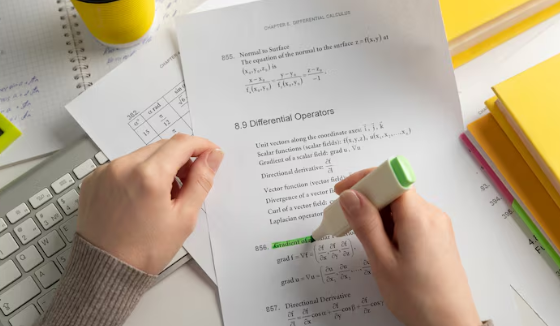
If you’re preparing for JEE Advanced, there’s one uncomfortable truth:
studying concepts alone won’t get you a top rank.
Most aspirants spend months learning theory but collapse under exam pressure. The gap isn’t knowledge, it’s execution.
That’s where a JEE Advanced mock test becomes non-negotiable.
Mock tests don’t just test preparation—they expose weaknesses, fix timing issues, and simulate the psychological pressure of the real exam. Without them, you’re basically guessing your readiness.
What is a JEE Advanced Mock Test?
A JEE Main Rank Predictor is a full-length or section-wise simulated exam designed to replicate:
- The exact exam pattern
- Difficulty level
- Time constraints
- Question distribution
The goal is simple:
train your brain to perform under real exam conditions.
Unlike casual practice, mock tests force you to:
- Make decisions under time pressure
- Balance accuracy vs speed
- Handle unpredictable question patterns
Why Mock Tests Matter More Than Study Material
Here’s the blunt reality:
Most students overestimate their preparation.
They solve questions slowly, refer to solutions frequently, and mistake familiarity for mastery.
Mock tests destroy that illusion.
What They Actually Do:
1. Reveal Your True Level
You can’t hide behind partial understanding.
Either you solve under pressure—or you don’t.
2. Improve Time Management
JEE Advanced is not just hard—it’s fast-paced.
Mock tests teach you:
- When to skip
- When to attempt
- When to guess (strategically)
3. Build Exam Temperament
According to the official guidelines from the Joint Entrance Examination system, the exam is designed to test analytical ability and problem-solving under constraints, not rote memory.
Mock tests simulate that pressure.
Types of JEE Advanced Mock Tests You Should Use
Not all mock tests are useful. Most are either too easy or unrealistic.
1. Full-Length Mock Tests
- Closest to real exam
- Essential in the last 2–3 months
- Should be attempted in a fixed time slot
2. Sectional Tests
- Focus on Physics, Chemistry, or Maths
- Ideal for weak areas
- Helps isolate subject-specific issues
3. Previous Year-Based Tests
- Based on actual exam questions
- Best for understanding pattern shifts
When Should You Start Mock Tests?
If you’re waiting to “complete the syllabus,” you’re already behind.
Ideal Timeline:
- 6–8 months before exam → Start sectional tests
- 3–4 months before exam → Begin full-length tests
- Last 2 months → Intensive testing + analysis
The mistake most students make?
They start too late and treat mock tests as evaluation instead of training.
How to Attempt a JEE Advanced Mock Test (Properly)
Most aspirants waste mock tests. Here’s how to actually use them.
Step 1: Simulate Real Conditions
- Sit for full duration
- No breaks
- No distractions
- Use the same time slot as the actual exam
If you don’t simulate pressure, the test is useless.
Step 2: Follow a Clear Attempt Strategy
A basic but effective approach:
- First round → Solve easy and direct questions
- Second round → Attempt moderate questions
- Final round → Try difficult ones if time permits
Don’t aim for 100% attempts.
Aim for maximum accuracy with smart selection.
Step 3: Analyze Immediately After
This is where real improvement happens.
Ask yourself:
- Which questions did I get wrong and why?
- Was it a concept issue or a silly mistake?
- Did I waste time on low-value questions?
Without analysis, mock tests are just ego checks.
Common Mistakes Students Make
Let’s call them out directly:
❌ 1. Giving Too Few Mock Tests
If you’ve taken less than 20 full-length tests, you’re underprepared.
❌ 2. Ignoring Analysis
Spending 3 hours on a test and 10 minutes reviewing it is stupid.
Analysis should take equal or more time than the test itself.
❌ 3. Chasing Scores Instead of Learning
Your score doesn’t matter in practice.
Your improvement curve does.
❌ 4. Using Low-Quality Test Series
Easy or unrealistic tests give false confidence.
How Many Mock Tests Are Enough?
There’s no magic number, but here’s a realistic benchmark:
- 30–50 full-length tests before the exam
- Plus multiple sectional tests
Anything less, and you’re gambling with your rank.
Role of Previous Year Papers
Mock tests are incomplete without JEE Advanced previous year papers.
Why?
- They show real exam difficulty
- They reveal changing trends
- They train you on actual question framing
According to official exam archives, question styles vary significantly each year. So relying on patterns alone is risky.
How to Track Your Performance
Blind practice doesn’t work. You need data.
Track These Metrics:
- Accuracy percentage
- Attempt rate
- Time spent per section
- Weak topics
Over time, you should see:
- Increased accuracy
- Better question selection
- Reduced panic
If not, your approach is flawed.
Best Strategy for the Final Month
This is where most students mess up badly.
What You SHOULD Do:
- Take 2–3 full tests per week
- Revise weak areas from analysis
- Focus on high-weightage topics
What You SHOULD NOT Do:
- Start new topics
- Ignore mock tests
- Panic over low scores
Final Reality Check
Let’s be blunt.
You don’t crack JEE Advanced by:
- Reading theory repeatedly
- Watching endless lectures
- Solving random questions
You crack it by:
- Practicing under pressure
- Learning from mistakes
- Adapting your strategy
And nothing does that better than a JEE Advanced mock test.
Conclusion
A JEE Advanced mock test is not optional—it’s the backbone of serious preparation.
If you’re not using mock tests effectively, you’re not preparing for the exam—you’re just studying.
And those are two very different things.